
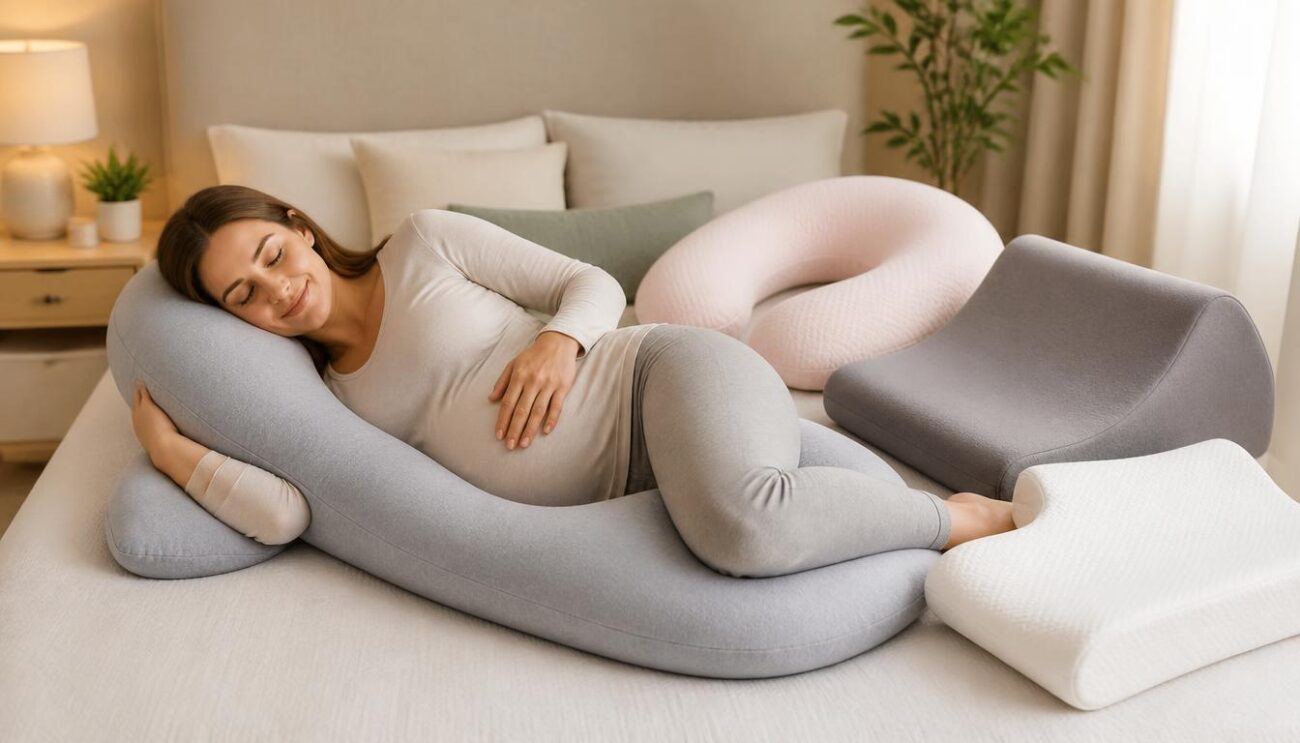
A good pregnancy pillow changes how you sleep once your bump starts getting in the way. It supports your belly, keeps your hips aligned, and takes the pressure off your lower back so you can actually get through the night. If you’re wondering which type suits your stage of pregnancy and what to look for before buying, here’s what actually matters.
Why Sleep Position Matters During Pregnancy
From around the second trimester onward, sleeping on your side becomes more comfortable and is generally the position midwives recommend, especially from 28 weeks. Side sleeping improves blood flow to the placenta and reduces pressure on major blood vessels, but it isn’t always easy to maintain through the night without support. A pregnancy pillow works by keeping you anchored in that position, so you’re not constantly readjusting or waking up on your back.
Types of Pregnancy Pillows
Not all pregnancy pillows solve the same problem, so it helps to know the shapes before you buy.
- C-shaped pillows curve around your back and between your knees, supporting your head, bump, and hips in one piece. They’re compact and a good middle-ground option.
- U-shaped (full body) pillows wrap around both sides of your body, so you get support whichever way you turn without having to flip the pillow. They take up more bed space but suit people who move a lot in their sleep.
- Wedge pillows are small triangular cushions that slot under the belly or lower back. They’re the most travel-friendly option and useful if you already have a pillow setup you like and just need extra bump support.
- Body pillows (I-shaped) run the full length of your body and are hugged rather than wrapped around, offering a simpler, budget-friendly alternative to the C or U shape.
Matching a Pillow to Your Trimester
In the first trimester, most people don’t need a dedicated pregnancy pillow yet — a wedge under the belly or between the knees is usually enough. By the second trimester, as the bump grows and pelvic girdle pain (PGP) or sciatica-type discomfort can start, a C-shaped or full-length pillow gives more consistent support. In the third trimester, when back pain, heartburn, and restlessness tend to peak, a U-shaped pillow tends to be the most comfortable because it stops you rolling onto your back during the night.
What to Look For Before Buying
- Fill material — memory foam holds its shape longer but sleeps warmer; polyester or microbead fills are lighter and cooler but compress faster.
- Removable, washable cover — essential, since these pillows get used every night for months.
- Size versus bed space — U-shaped pillows are the bulkiest; check your bed size and whether a partner will still have room.
- Adjustability — some pillows let you add or remove filling to change firmness, which is useful as your bump changes shape over the months.
Common Mistakes to Avoid
People often buy a pillow too early or too large for their bed, or choose memory foam without realising it traps heat. It’s also worth checking return policies, since comfort preferences vary a lot and what works for one person may not suit another.
Caring for Your Pregnancy Pillow
Wash the cover regularly, especially in the third trimester when night sweats are common. Most inner pillows shouldn’t go in the washing machine — check the label, as many recommend spot cleaning or airing out instead.
FAQs
When should I start using a pregnancy pillow?
Most people find it useful from the second trimester onward, once the bump makes side sleeping harder to maintain on its own.
Can I use a pregnancy pillow after birth?
Yes — many people repurpose C-shaped or wedge pillows for breastfeeding or nursing support after the baby arrives.
Do pregnancy pillows help with pelvic girdle pain?
They can ease discomfort by keeping your hips aligned overnight, but persistent PGP is worth mentioning to your midwife, as it may need physiotherapy support alongside better sleep positioning.
