
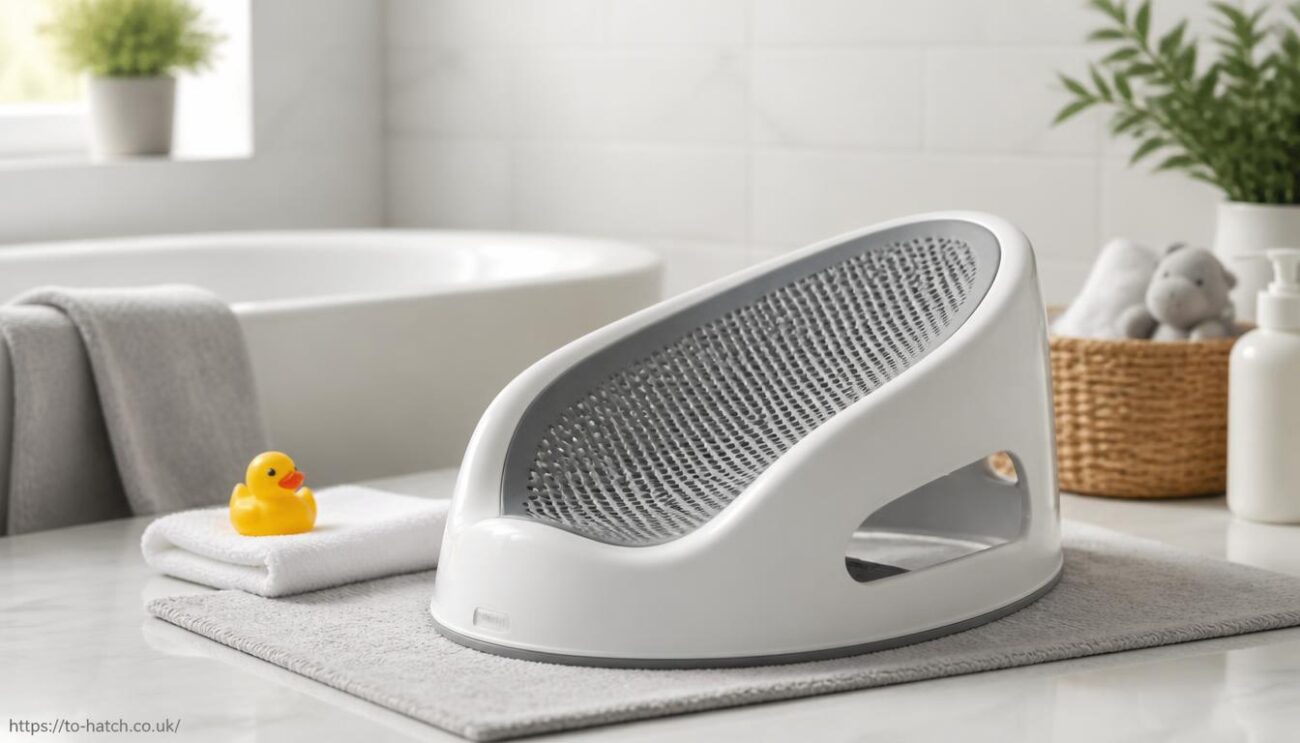
A baby bath seat can make bath time far less stressful once your baby can sit with some support but isn’t quite ready for a full-size bath alone. An Angelcare bath seat is one of the most searched-for options in this category — here’s what these seats actually offer, how to use one safely, and what to check before buying.
What an Angelcare Bath Seat Is For
These seats sit inside a standard bathtub and use suction cups or a support frame to hold a baby in a semi-reclined or upright position, freeing up your hands to wash them rather than needing to support their head and body the whole time. They’re generally suitable from around the time a baby can hold their head steady, up to roughly the age they can sit unaided — always check the specific age and weight range on the product you buy, as this varies by model.
Key Features to Look For
- Non-slip suction base — anchors the seat to the tub floor so it doesn’t shift during use.
- Reclined support structure — cradles the head and back for babies who can’t yet sit fully independently.
- Drainage holes or mesh — lets water flow through rather than pooling, which also helps the seat dry faster between uses.
- Compact, foldable design — useful if bathroom or storage space is tight.
- Easy-clean material — smooth plastic or mesh that doesn’t hold onto soap residue or mould in the seams.
Safety Considerations
A bath seat is a support aid, not a safety device — it doesn’t replace constant, hands-on supervision. Babies can tip or slide out of position, and suction cups can release unexpectedly on certain tub surfaces, so staying within arm’s reach for the entire bath is essential regardless of how secure the seat feels. It’s also worth checking the seat is rated for your baby’s current weight and developmental stage, since outgrowing a seat too early increases tipping risk.
How to Set Up an Angelcare Bath Seat
- Press the suction cups firmly onto a clean, flat section of the tub base — textured or curved surfaces can weaken the grip.
- Fill the bath to the seat manufacturer’s recommended water level, usually a few inches, before placing your baby in.
- Test the seat’s stability by gently pressing down on it before use.
- Keep one hand on your baby throughout, even with the seat providing support.
Angelcare Bath Seat vs Other Bath Support Options
Compared to a foam bath support (which relies on friction, not suction, and works from newborn age) or a bath tub insert, a suction-based seat like Angelcare tends to suit slightly older babies who can already hold their head up but still need trunk support. Foam supports are often used earlier, while a bath seat becomes more useful once a baby is more active in the water and needs a sturdier structure.
Cleaning and Maintenance
Rinse the seat after every use to stop soap and skin oils building up, and check the suction cups and seams regularly for mould, since damp plastic in a warm bathroom is exactly the environment mould grows in. Most seats can be wiped down with a mild, baby-safe cleaner rather than harsh chemicals.
FAQs
At what age can a baby use an Angelcare bath seat?
This varies by specific model, but most are designed for babies who can hold their head up, roughly from a few months old, up to the point they can sit unaided — always check the age and weight guidance on the product itself.
Do suction cups work on all bathtubs?
No — they need a smooth, non-textured surface to grip properly. Textured, painted, or very old enamel tubs can affect suction reliability.
Can I leave my baby in a bath seat unattended?
No. A bath seat is a support aid, not a substitute for supervision — a baby should never be left alone in the bath, even briefly, regardless of the seat used.
