
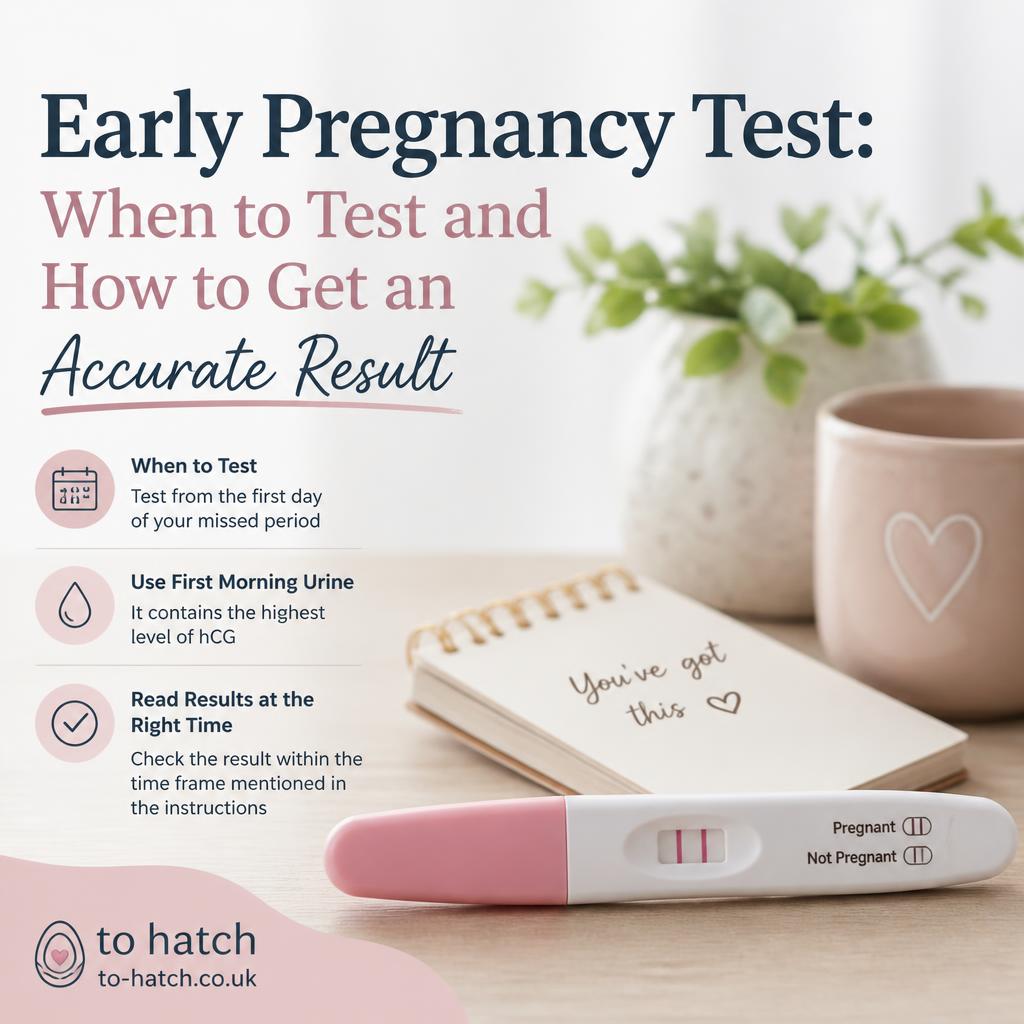
Knowing when to take an early pregnancy test can save you from either testing too soon and getting an unclear result, or waiting longer than you need to. Here’s how hCG detection actually works and how to get the most accurate result.
How Early Pregnancy Tests Work
Pregnancy tests detect hCG (human chorionic gonadotropin), a hormone produced by the placenta shortly after a fertilised egg implants in the uterus. hCG levels roughly double every 48 to 72 hours in early pregnancy, which is why testing too early can produce a false negative — there simply isn’t enough hormone in your system yet for the test to pick up.
When Can You Test?
- From the first day of a missed period — this is when most standard tests are designed to give a reliable result.
- A few days before your missed period — some “early result” tests claim sensitivity to detect pregnancy up to 4–6 days before a missed period, though accuracy is lower this early, since hCG levels vary a lot between individuals.
- Implantation typically happens 6–12 days after ovulation, so testing before this point will almost always return a negative result regardless of how sensitive the test claims to be.
Getting the Most Accurate Result
- Test with your first urine of the day, when hCG is most concentrated, especially important if testing early.
- Avoid drinking excessive fluids beforehand, which can dilute hCG levels in your urine.
- Check the expiry date on the test, as expired tests can give unreliable results.
- Read the result within the time window specified in the instructions — lines appearing after the window has passed (an “evaporation line”) aren’t considered valid.
Why a Faint Line Can Be Confusing
A faint positive line usually still means pregnant, since even a small amount of hCG will trigger a reaction — the darkness of the line reflects hormone concentration, not how “pregnant” you are. If a line appears faint, testing again in 2–3 days with more concentrated urine, or using a digital test that gives a clear word-based result, can help remove the ambiguity.
False Negatives and False Positives
False negatives are far more common than false positives with modern tests, usually caused by testing too early or diluted urine. True false positives are rare, though certain fertility medications containing hCG, or in very rare cases specific medical conditions, can occasionally cause one. If you get a positive result, it’s very likely accurate; if you get a negative but still suspect you’re pregnant, retesting in a few days or getting a blood test from a GP is the most reliable next step.
Home Test vs Blood Test
A blood test measuring hCG, done at a GP surgery or clinic, is more sensitive than a home urine test and can detect pregnancy slightly earlier and more reliably, which is why it’s sometimes used when a urine test result is unclear or when there’s a specific medical reason to confirm pregnancy sooner.
FAQs
How many days after sex can I test for pregnancy?
It’s more accurate to count from ovulation rather than sex, since implantation (and hCG production) only begins 6–12 days after ovulation, regardless of when intercourse happened within your fertile window.
Can stress or medication affect a pregnancy test result?
Most medications don’t affect results, but fertility treatments containing hCG can cause a false positive for a short period, so check with your clinic if you’re undergoing fertility treatment.
Should I test again if I get a negative result but still feel pregnant?
Yes — if your period still hasn’t arrived a few days later, testing again with first-morning urine, or getting a blood test, is a sensible next step.
